Friday, May 9, 2008

Peruvian Media Systems


Although Peru has a relatively advanced media system that can be compared to that of the United States--monopolies included--it still manages to keep certain traditions alive that are unique to media of Latin America.


These traditions include political undertones in almost every newspaper printed. These provide multiple angles to the government and issues in the country depending on a specific political party.


Most publications of print media originate in the capital, Lima (see right). Among them is the official daily newspaper, el Diario Oficial Peruano, which is required to publish any laws recently passed.


Diario El Comercio, also published in Lima, has the largest circulation of any paper and is the oldest privately owned paper.


SOLAR (Sociedad Latioamerica de Rediodifusion) and SUR (Sistema Unido de Retransmision), both privately owned, are the main regional television and radio networks.

Also, the country has a large news agency, Andina, Agencia Peruana de Noticias, which is also based in Lima.


Intrigued? Give these a click:

http://www.pressreference.com/No-Sa/Peru.html

http://www.andina.com.pe/Espanol/

Government admits fault without widespread U.S. press coverage


The news media has produced little on the status of the United States occupation of Iraq lately. Aside from stipulations that Abu Ayyub al-Masri, head of al Qaeda in Iraq, might be captured and the traditional grim statistics of dead soldiers and civilians, the media doesn’t seem to be digging deep in to the country’s largest foreign human and fiscal expenditure.

Robert Baer, a former CIA officer assigned to the Middle East and current journalist for TIME magazine brought the first piece of investigative journalism on Iraq that I have seen in quite sometime. In his May 9th story, “Playing the Oil Card,” Baer comments on the U.S. Ambassador to Baghdad, Ryan Crocker’s appearance before Congress. According to Baer’s account, Crocker agreed that U.S. occupation of the Gulf was necessary to obtain stabilize oil prices.

In testifying to Congress, Crocker stated that progress was made in the region earlier in the week after the U.S. took control of the port of Basra. He assured Congress that U.S. presence in the region would stabilize oil prices. However, as Baer points out, is the occupation about oil? As he states: “And $10 a gallon is his [Bush’s] equivalent of an economic WMD.”

Crocker’s consent that U.S. involvement in the region would be necessary for stabilized oil indeed goes against the statements of the Bush administration. I personally wonder why other news outlets did not highly publicize his comments and the danger they pose. After all, U.S. involvement in Iraq might blaze on if the American press does not continuously alert the public about the damage and deception the war has created.


Here's the article:

http://www.time.com/time/world/article/0,8599,1738883,00.html?xid=feed-cnn-world

Nigeria Media Systems


Nigerian media system has been labeled as partly free by freedomhouse.org and ranked at 131 for media freedom by reporterswitoutborders.org.

Journalist in Nigeria face alot of opposition when it comes to investigative journalism because their media is government owned. However their are many privately owned media outlets that try to give balanced and objective coverage of the news.

Even thought many of the journalist face consequences for what they cover in the media , journalist continue to go against the corrupt government powers and try to be objective in their coverage. Many journalist have been killed arrested and beaten throughout country because of their opposition toward the government. Still they do not give up the fight to have their media eventually be free

what YOU didn't know about the United Arab Emirates


Although the United Arab Emirates or the UAE as it is commonly referred to is one of the more liberal countries in the Arab region, it still faces heavy governmental influence.

All of the country's media is either owned or influenced by the government and the laws of the land strictly prohibit criticism against the government or any of the ruling parties.

Domestic and foreign news are censored before they are printed or broadcast and the government reserves the right to alter any story to fit its needs.

Almost all of the television networks, there are 15 of them, are owned by either the government or media conglomerates who are heavily influenced by the government.

Internet use in the country has become widespread with over 37 percent of the population online. However, the ONLY internet service provider is Etisalat (a government-operated telecommunications conglomerate). Online sites are heavily regulated and unauthorized sites tell the user that the contents of these sites are against the cultural and moral values of the country.

Newspapers are also a huge tool of the government and often provided fluff PR pieces instead of hard-hitting investigative news.

Reporters Without Borders ranked the country #65 on its press freedom list and Freedom House labeled the media not free.

I hope that you take a moment to visit the following links because they take you to two of the major newspapers in the country. Read a few of the stories and you can immediately tell that criticism of the government is non-existent and that most of the stories about the country are very positive.


Media of England


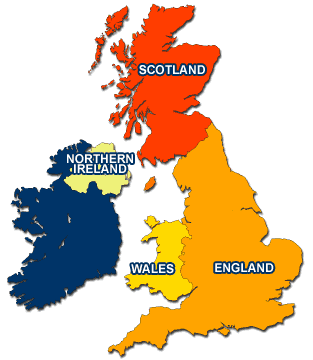
England is home to one of the freest media systems in the world. Though the United Kingdom (of which England is a part) ranked 24th on the annual list according to Reporters Without Borders, this was largely due to a six year old murder that has gone unsolved, and death threats received against reporters, both in Northern Ireland rather than in England.

One of the most interesting aspects of the English media system is that the BBC and its channels (BBC One, BBC Two, BBC Three, etc.) are funded by a license fee that individual television owners must pay when they buy a t.v. if they want to receive the channels. This method of public funding is meant to keep the television networks neutral and free from commercial interests. No advertising can be found on the BBC website, and the network is publicly run. Furthermore, even the corporate-owned television networks in the United Kingdom are required to abide by a certain level of legally mandated neutrality. This latter fact is likely much to the chagrin of Rupert Murdoch (of News Corp. ownership fame), who owns the Sky Network in the country, and wishes to, sometime in the future, model that network to operate more like its American counterpart, Fox News.

North Korea gives key nuclear documents to U.S.

North Korea turned over key nuclear weapons documents to a visiting U.S. diplomat on Thursday. The North handed over the documents at the capital of Pyongyang and the diplomat is to carry them to South Korea later this week.

The senior State Department official who leaked the story asked for anonymity so he could describe the outcome of the confidential meetings between U.S. envoy Sung Kim and the government of Kim Jong II.

The documents are supposedly detailed technological logs from North Korea's shuttered plutonium reactor.

The State Department official said, "They are an important element in the verification of a declaration which will include figures for the amount of plutonium they have produced."

What I could not believe when reading this story was that the Associated Press would let this official remain anonymous. This is a huge piece of information and I think that the AP should have searched harder for a source that they could actually name. What if this information is incorrect? What are the sources intentions in leaking this information? These are the questions that should have ran through the AP reporter's head when writing it.

Furthermore, why did CBS News run this story on their website? Stories that run with anonymous sources usually cause skepticism and CBS should have waited until a credible source could be identified before running it. We all saw what happened when Dan Rather ran a story about President George W. Bush's military service that turned out to be untrue, so CBS should have the common sense to be extra careful.

For more information and to read the full article, go to http://www.cbsnews.com/stories/2008/05/08/world/main4080396.shtml

Indian Media: Has to speak the language


While English and Hindi are the official national languages of India, they are only spoken by 30% of the population. Interestingly, the majority of government documents, newspapers, and other information are published in the two official languages. Additionally, the majority of English and Hindi speakers usually live in the major cities of Bombay, New Delhi, Calcutta, and Madras.

So, one might wonder: what about the other 70% of the population? The majority of the population lives in rural areas of India, where one of the fifteen official vernacular, or regional languages are spoken. Traditionally excluded from mainstream media (written in English and Hindi), Indians living in rural India have recently responded to regional editions of English and Hindi national papers such as the Indian Express and The Times of India by buying subscriptions en masse. Since deciding to publish multiple vernacular editions in 2001 and 2002, publications have at least doubled their circulation.

If media outlets want to access the Indian population, they have to start with fundamentals: publishing or broadcasting in multiple vernacular languages will inevitably boost profits.


- Theodora Stringham